
Flying with only an under-seat personal item is one of the most dependable ways to avoid airline baggage fees, but it works only when your bag meets the airline’s exact size rule and your fare includes that item. A personal item normally goes beneath the seat in front of you; it is not an overhead cabin bag and it is not checked luggage. Choose a soft bag that fits the published dimensions, pack a repeatable small wardrobe, and compare total flight costs before booking. That approach can keep a low headline fare from becoming expensive at checkout or the gate.
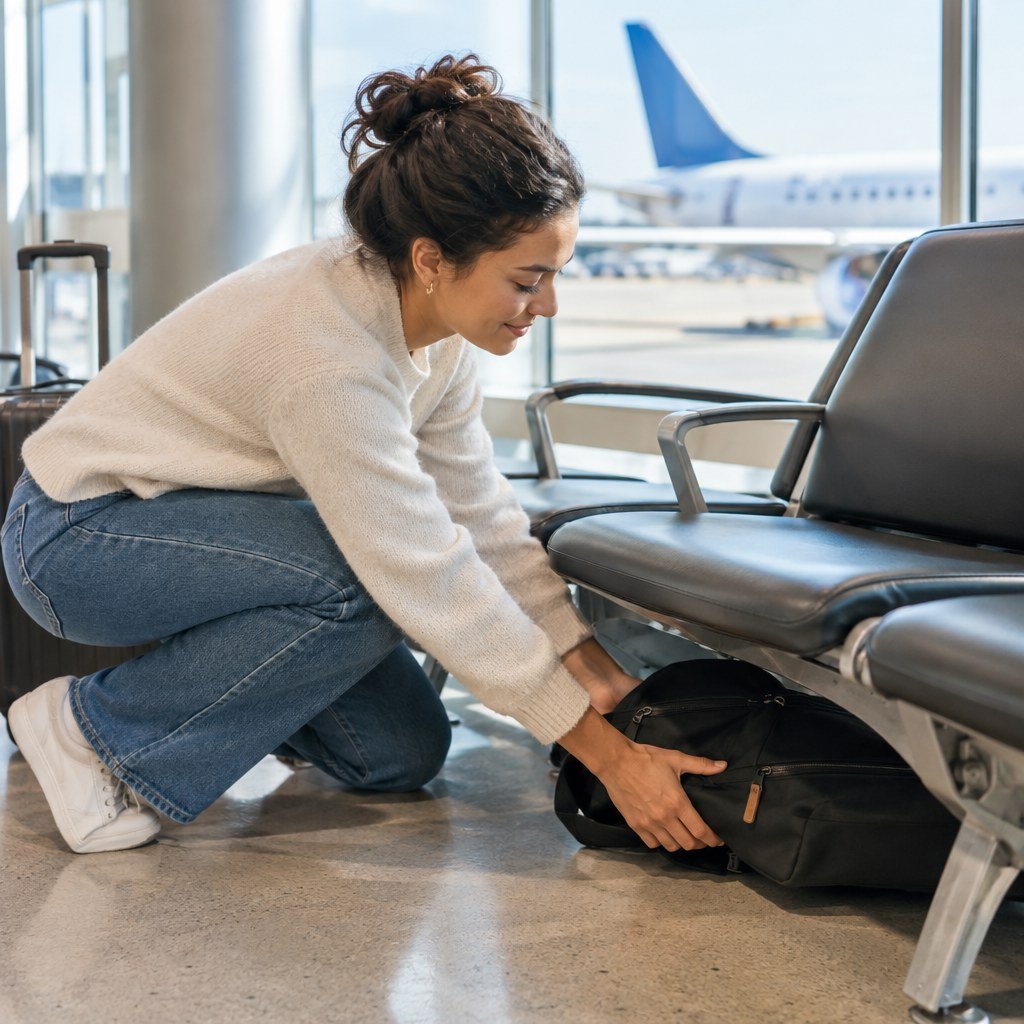
Quick answer: To avoid airline baggage fees with a personal item, book a fare that includes one free under-seat bag, use a bag smaller than the published maximum including wheels and handles, and pack enough washable clothing for your trip. Confirm the policy for your route before paying, because low-cost airlines often charge separately for overhead cabin bags.
Understand the personal item before trying to avoid airline baggage fees
Airlines use similar terms differently, so read the allowance rather than relying on the label. A personal item is usually a backpack, tote, purse, laptop bag, or compact duffel that fits under the seat. A cabin bag, sometimes called a carry-on, generally uses the overhead bin. Checked baggage travels in the hold and is collected after landing.
Many full-service fares include a personal item and an overhead bag. Many ultra-low-cost fares include only the personal item. That difference matters particularly on international itineraries, where a cheap segment can have a stricter bag policy than the long-haul flight attached to it.
Published limits are not interchangeable
Ryanair’s published bag policy allows every passenger one small personal bag measuring up to 40 x 30 x 20 cm, which must fit under the seat. Read Ryanair’s current bag policy before booking, since eligibility can vary with the option purchased.
easyJet states that every customer may bring one small cabin bag up to 45 x 36 x 20 cm, with a maximum weight of 15 kg, provided the traveler can lift and carry it. Check easyJet’s cabin-bag rules for the latest wording and larger-bag options.
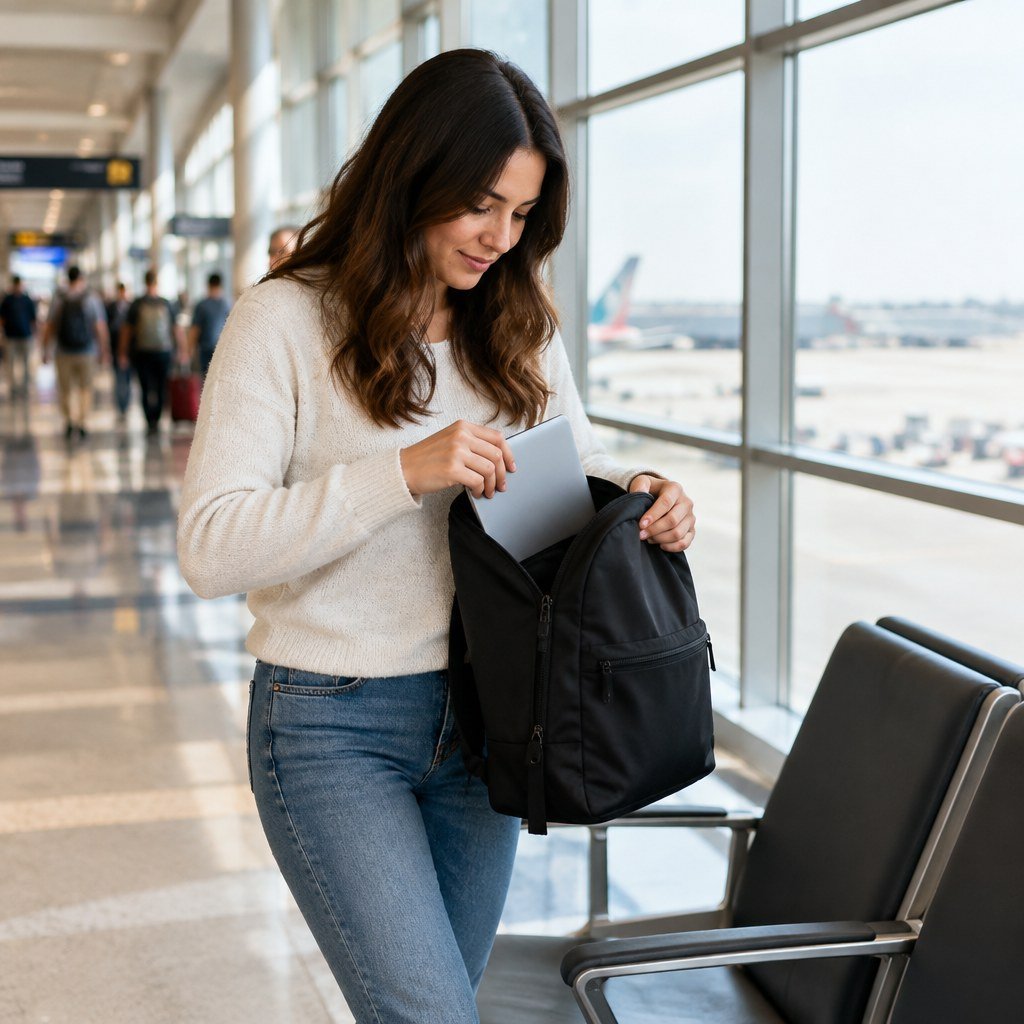
Those dimensions show why “carry-on size” is not a safe shopping standard. A bag acceptable on one airline can exceed another airline’s free personal-item allowance. Policies may also change, so check the exact fare, route, and operating carrier shortly before departure.
Choose a bag that fits the sizer, not just your packing plan
The safest personal-item bag is a lightweight, structured-enough backpack or soft-sided duffel with little unused depth. Soft sides can be helpful because they compress slightly, but they are not permission to force an overfilled bag into a metal sizer.
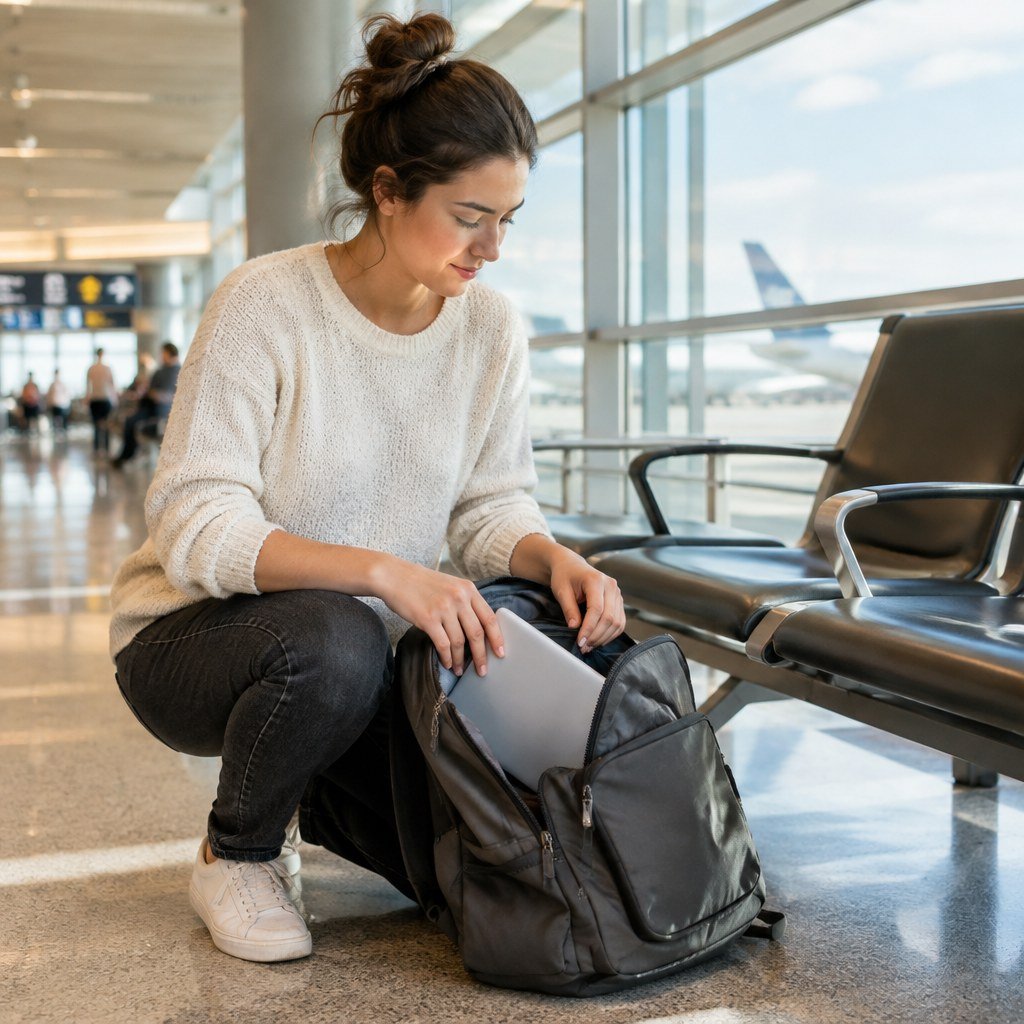
Measure every outside point
Measure length, width, and depth after packing. Include rigid handles, external pockets, protruding straps, wheels, and any laptop compartment that adds bulk. Manufacturer dimensions can describe an empty bag or omit wheels, so use your own tape measure. If your bag barely fits at home, it may not fit when a jacket, souvenir, or airport purchase is added.
Keep a compact foldable tote inside your personal item for use after security or at your destination. Do not use it as a second bag during boarding unless the airline explicitly permits that arrangement. Gate staff may require loose items to fit inside the one permitted bag.
Pack a personal item for three days, then extend it with laundry
A personal-item-only trip succeeds through repetition, not deprivation. Build a small clothing system around one color palette, quick-drying fabrics, and shoes you can wear for walking, transit, and casual meals. Wear your bulkiest clothing on the plane: coat, boots, sweater, or heaviest trousers.
A realistic three-day personal-item packing list
- Two tops plus the top worn in transit.
- One spare bottom, with the second worn on travel day.
- Three sets of underwear and socks.
- Sleepwear or clothing that can perform double duty.
- One compact wash kit, medications, documents, charger, and adapter.
- One weather layer chosen for the forecast, not every possibility.
Roll or fold clothing into compact layers, then place the heaviest items closest to the bag’s back panel. Put liquids, electronics, and documents where they are easy to remove. Compression cubes can organize clothing, but they do not reduce the packed bag’s exterior dimensions; over-compressing often creates a bulge that causes trouble at the sizer.
Use a seven-day laundry plan
For a week or longer, pack roughly the same core wardrobe and plan one wash cycle. Bring a small amount of detergent only if permitted by your destination and security rules, or buy it locally. Sink-wash quick-drying items early in the evening, roll them in a towel to remove water, and allow enough drying time. A laundromat can be the simpler option when weather is humid or your accommodation has limited ventilation.
For more item-by-item planning, use this solo traveler packing checklist as a starting point, then reduce it to what your airline’s personal-item dimensions can honestly hold.
Budget tip: Price laundry before assuming it is inconvenient. A modest wash during a longer trip can be less costly than buying a bag option on multiple flight segments, especially when each airline charges separately.
Compare fare bundles by total trip cost, not the first price shown
Disclosure: Some links are affiliate links. If you book through them, Budget Trips Guide may earn a commission at no extra cost to you.
The best basic fare is not always the cheapest choice. When searching, add the bags you will actually bring, seat selection if you need it, payment charges where applicable, and the return flight’s rules. You can compare flight options on Trip.com, then review the allowance again before booking because baggage inclusions can be less obvious than on the airline’s own checkout page.
Consider this illustrative example, not a verified market quote. Fare A costs $120 round trip and includes one personal item. Adding an overhead cabin bag costs $70 round trip, making the likely total $190. Fare B costs $175 and includes a personal item plus an overhead cabin bag. If you need the larger bag, Fare B is cheaper and may offer more flexibility.
Now add the laundry question. If Fare A allows you to travel comfortably with only the personal item and you spend an illustrative $12 washing clothes, its $132 trip cost remains lower. If avoiding laundry leads you to pack too much and pay the $70 bag fee, the supposedly cheaper fare loses its advantage.
Search flights with the allowance in mind
Filter by schedule and airport first, then compare bag-inclusive totals for every leg. Mixed itineraries deserve extra attention: a bag included on the outbound flight does not mean it is included on the return. Our guide to finding cheap flights anywhere can help you compare routes without treating the initial fare as the final price.
Avoid the mistakes that trigger last-minute bag fees
- Read the fare’s baggage allowance before paying, including the return segment.
- Measure your fully packed bag, including handles, wheels, and exterior pockets.
- Check in online and save the airline’s bag rules with your booking details.
- Wear bulky layers rather than forcing them into an already full bag.
- Consolidate loose duty-free, food, and airport purchases before reaching the gate.
- Arrive with enough time to repack calmly if staff ask you to use the sizer.
Do not rely on unsafe or dishonest baggage “hacks.” Hiding items under clothing, blocking access to safety equipment, using another traveler’s allowance without permission, or arguing that an oversized bag should count as a personal item can create stress and fees. Airlines can enforce their published rules, and gate charges may be higher than purchasing an appropriate option during booking.
Liquids are a separate issue from bag size. Security restrictions depend on the departure airport and jurisdiction, and they can change. Check the airport security authority and your airline before packing liquids, batteries, sharp items, medication, or food. A compliant bag still needs to pass security safely.
For additional practical planning ideas, see our guide to flight hacks that work for budget travel. Focus on methods that are transparent, permitted, and useful across different airlines.
Frequently asked questions
Can I bring a purse and a backpack as one personal item?
Usually, only if the purse fits completely inside the backpack before boarding. Airlines that advertise one personal item may treat two separate bags as an additional cabin bag, even when each bag is small.
Will a personal item always fit under the seat?
No. Seat configuration, emergency-exit rows, bulkhead seats, and aircraft type can affect under-seat storage. Your personal item must still comply with the airline’s published dimensions, and crew instructions take priority during the flight.
Is a rolling suitcase a personal item?
It can be only if its complete outside measurements fit the airline’s personal-item limit. Most rolling suitcases are designed as overhead cabin bags, so confirm dimensions including wheels and handles rather than assuming.
When should I pay for a cabin bag instead?
Pay for it when essential gear, cold-weather clothing, work equipment, or a no-laundry itinerary cannot fit within the personal-item allowance. Buy the option during booking when possible, then compare it against a fare bundle that already includes it.
The bottom line: pack to the published limit
A measured personal item, a small repeatable wardrobe, and a total-cost comparison can make budget flights easier to evaluate. Check the airline’s current policy before every booking and before leaving for the airport.