
Affordable Nature Escapes in Costa Rica
Affordable Costa Rica nature escapes on a budget—cheap national parks, beaches, volcanoes, Rio Celeste, transport tips, safety advice, and tour hacks.
DESTINATIONSCENTRAL AMERICA
Jason A Ellis
12/27/202514 min read
Affordable Nature Escapes in Costa Rica: Parks, Beaches & Volcano Days You Can Actually Do on a Budget
Costa Rica has a reputation for being expensive. And yeah—if you book private shuttles, guided tours every day, and beach towns where a smoothie costs the same as a full meal, it absolutely can be.
But here’s the truth: the best part of Costa Rica isn’t the luxury stuff. It’s the nature—and a lot of that is surprisingly affordable if you plan it the smart way.



About the Author
Hi, I’m Jason—an avid traveler with a passion for discovering new places, cultures, and perspectives. Born and raised in the United States, I now call the Philippines home as I continue to explore the world, one destination at a time. My travel journey has taken me across vibrant cities and serene landscapes in places like Singapore, Hong Kong, Japan, Okinawa, Canada, and Mexico (to name a few). Through this blog, I share real-world travel insights, budget tips, and stories to help you explore smarter and deeper—no matter where your passport takes you.
Like This? You Might Also Love:
This travel Costa Rica guide is for you if you want rainforest trails, volcano views, wildlife, and waterfall days… without burning your budget. We’re talking national parks with reasonable entrance fees, easy day trips from major hubs, and a few simple tricks that make Costa Rica cheap travel totally doable.
And because real life matters: I’m also covering travel Costa Rica safety, ticketing headaches (some parks require advance online tickets), when nature tours in Costa Rica are worth paying for, and where affiliate tools actually help (hotels, transport, insurance, eSIMs).
Let’s build you a nature-first trip that feels rich… without needing a rich-person budget.
Table of Contents
Affordable Nature Escapes in Costa Rica: What to Expect
Why Costa Rica Can Still Be Budget-Friendly for Nature
Quick Budget Snapshot: Fees, Food, and Getting Around
Cahuita National Park: The “Almost Free” Wildlife Beach Walk
Marino Ballena National Park: Whale Tail Beach + Low-Tide Magic
Poás Volcano National Park: The Easiest Volcano Day Trip from San José
Braulio Carrillo (Quebrada González): Rainforest Close to the Capital
Carara National Park: Wildlife and Birds Without the Manuel Antonio Price Tag
Tenorio Volcano National Park (Río Celeste): The Blue Waterfall Day
Rincón de la Vieja: Volcanic Landscapes Without Pricey Tours
The Cheapest Ways to Get Around (Without Wasting Your Trip)
Nature Tours in Costa Rica: When to Pay and When to Skip
Smart Planning: Tickets, Timing, and What to Pack
Travel Costa Rica Safety: Budget Traveler Tips That Actually Matter
Sample Itineraries: 3-Day and 7-Day Budget Nature Plans
Where to Stay Cheap Near Each Nature Spot
Final Budget Checklist: Do This, Not That
Why Costa Rica can still be budget-friendly for nature
Costa Rica gets labeled “pricey” because it’s popular, stable, and easy to travel—especially compared to some nearby countries. But nature travel here has a secret advantage:
The “attractions” are mostly outdoors.
You’re not paying $60 to enter a museum or $150 for a theme park ticket. You’re paying $6–$15 for national parks that deliver beaches, rainforest, volcano trails, wildlife, and that “I can’t believe this is real” feeling.
If you do it right, you spend your money on:
Park entry fees
Buses (cheap)
A few strategic upgrades (like a guide in wildlife-heavy spots, or a shuttle when a bus route is brutal)
And you skip the stuff that quietly nukes your budget:
resort-style restaurants
private drivers for every move
tours you don’t actually need
That’s the heart of traveling in Costa Rica on a budget: keep it simple, chase the parks, and let the country do what it does best.
Quick budget snapshot: what you’ll actually pay
Prices move around depending on season and location, but for most budget travelers, this is the reality check that helps you plan:
Typical daily costs (budget-ish)
Park entry fees: usually $6–$15 per park day
Transport: public buses are the cheapest; shuttles cost more but save time
Meals: local “sodas” (small diners) are your best friend
Tours: optional, but sometimes worth it (more on that below)
Two planning rules that save you money fast
Pick 1–2 hubs and do day trips.
You’ll spend less on transport and avoid pricey, tourist-only zones.Know the ticket system.
Some parks require online tickets/reservations and won’t sell at the gate. If you don’t plan this, you lose a whole day or pay for a last-minute tour you didn’t want.
If you’re locking in accommodations as you plan, compare prices across platforms—sometimes the same place swings wildly by date. For quick checks, I usually tell people to compare options on Booking.com and Hotellook to spot the best value in each area.
The 7 affordable nature escapes worth building a trip around
These are the spots where Costa Rica feels like a cheat code: big nature, reasonable cost, and easy to do without expensive packages.
I’ll give you the budget play for each one.
1) Cahuita National Park (Caribbean coast): the “almost free” wildlife beach walk
If you want Costa Rica nature without Costa Rica prices, Cahuita is one of the best choices in the country.
Why go:
A coastal jungle trail that runs along gorgeous Caribbean beaches, with real chances of spotting wildlife (monkeys, sloths, birds) without needing a guide.
What it costs:
Cahuita is famous for its donation-based entry at the main entrance. (In other sectors, there may be set fees—so don’t assume every entrance works the same.)
How to do it cheaply:
Base yourself in Cahuita town or nearby Caribbean towns and walk/bus in.
Bring water + snacks. Food near tourist entrances gets expensive fast.
Go early for wildlife. Midday heat = fewer animals and more people.
When a tour is worth it:
If you’re the type who really wants to maximize wildlife spotting, a guide can help—especially for sloths and subtle animals. But if your budget is tight, Cahuita is one of the best self-guided park days in Costa Rica.
Where to stay nearby (budget-friendly approach):
Look for simple guesthouses or hostels near Cahuita or Puerto Viejo, ideally with a kitchen. Search on Booking.com or Hotellook to compare cheap stays and filter for “kitchen” and “fan/AC.”
2) Marino Ballena National Park (Uvita): whale tail beach + low-tide magic
This is one of the most iconic “nature moments” you can do on a modest budget.
Why go:
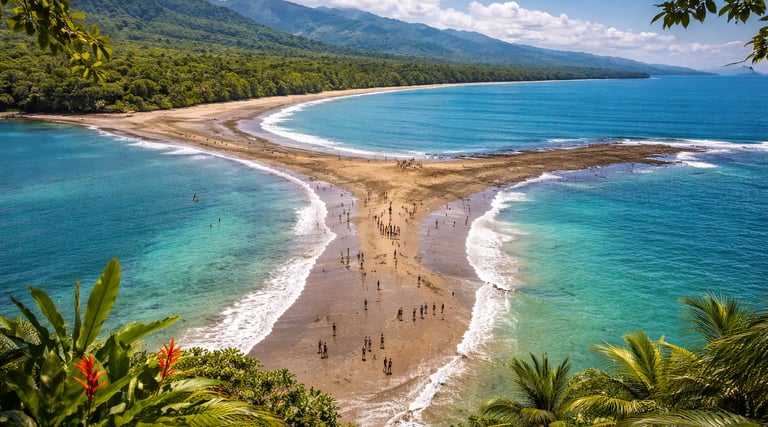
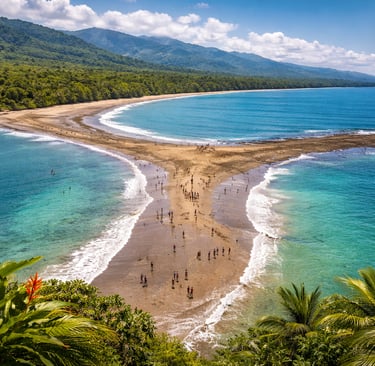
At low tide, you can walk out on the famous whale tail sandbar—a natural formation that literally looks like a whale’s tail from above.
What it costs:
Entry is typically around $6 for foreigners.
How to do it cheap:
Plan around low tide. That’s the whole experience.
Bring your own snacks and a towel; treat it like a beach day.
Skip overpriced add-ons unless you’re going for whales or dolphins.
Nature tours in Costa Rica angle:
This is a spot where a tour can be worth it if:
You’re visiting during whale season and want a real chance of seeing them
You want dolphins/whales and don’t want to gamble
If not? The park itself gives you a great day for cheap.
Where to stay nearby:
Uvita has a mix of backpacker-friendly places and pricier eco-lodges. If you want Costa Rica cheap travel, stay slightly outside the center and use a short taxi or local bus when needed. Compare deals on Hotellook (it’s great for spotting price differences fast), and cross-check on Booking.com for cancellation flexibility.
3) Poás Volcano National Park: easiest volcano day trip from San José
You don’t need a fancy multi-day itinerary to see a volcano in Costa Rica. Poás is one of the cleanest “city + nature” combos.
Why go:
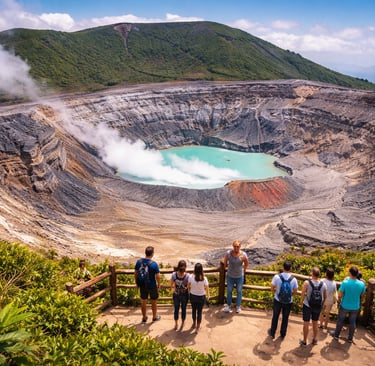
A dramatic crater view that’s doable as a half-day or day trip from San José.
What it costs:
Typically, around $15 for non-resident adults.
How to do it cheaply:
Stay in San José and do this as a day trip instead of moving your whole base.
Go early. Volcano visibility often gets worse later in the day.
Pack layers—it can feel cooler at elevation.
Ticketing note:
Poás often requires advance online tickets and timed entry. Don’t wing it.
Transport tip:
If you’re not renting a car, this is one case where splitting a shuttle or hiring a driver with other travelers can be worth it—especially if public transport schedules are awkward.
If you do decide to rent a car (especially with 2–4 people), compare prices on Economy Bookings—sometimes it’s cheaper than booking direct once you factor in availability and last-minute rates.
4) Braulio Carrillo (Quebrada González): rainforest close to the capital
Most people land in San José and immediately rush somewhere else. That’s a mistake if you’re trying to keep costs down.
Why go:
Braulio Carrillo delivers a real rainforest feel—dense greenery, big trees, wildlife—without expensive transfers to faraway regions.
What it costs:
Entrance is generally in the affordable range (often listed around the low teens in USD for foreigners).
How to do it cheap:
Make it a San José day trip.
Go early, bring snacks, and treat it as a low-cost nature reset before heading onward.
If you don’t want to rent a car, ask your hostel/hotel if they can help you join a small shared ride.
When a tour is worth it:
If you’re desperate to spot specific wildlife, a guide can help. But as a budget play, this is one of the best “close to the city” nature days.
Where to stay:
San José has a wide range of budget stays. If you’re staying a night or two to do Poás or Braulio Carrillo, you can often score solid deals if you book early. Compare on Booking.com and Hotellook and prioritize places near bus terminals if you’re moving by public transport.
5) Carara National Park: wildlife and birds without the Manuel Antonio price tag
Manuel Antonio is beautiful—but it can feel crowded and expensive. Carara is a smarter budget alternative for nature lovers, especially if you’re into wildlife and birds.
Why go:
Great biodiversity, is famous for birds (including scarlet macaws in the region), and it works well as a stop between destinations.
What it costs:
Typically around $10 + tax for foreign adults (varies slightly depending on official updates).
How to do it cheap:
Treat it as a “transfer day” stop if you’re heading between San José and the Pacific coast.
Get there early to beat crowds and heat.
Bring snacks and water.
Nature tours in Costa Rica angle:
A guide is most valuable here if you’re a birder or you really care about wildlife spotting. Otherwise, you can enjoy the trails solo.
Transport tip:
If bus routes are annoying for your route, a shared shuttle can sometimes be the best “time-to-money” trade. If you’re landing late or have awkward timing, consider a reliable transfer service like Welcome Pickups or Kiwitaxi instead of gambling on random rides.
6) Tenorio Volcano National Park (Río Celeste): the blue waterfall day
If your goal is a nature day that feels like a highlight reel, this is it.
Why go:
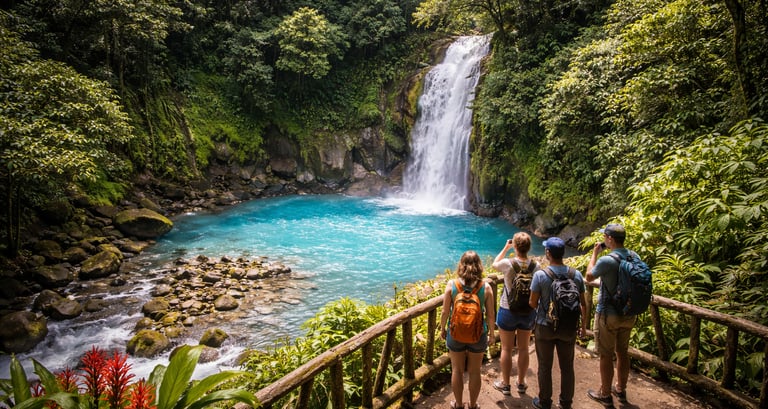
The Río Celeste waterfall is unreal—milky blue water that looks edited.
What it costs:
Often around $12 for adult entry (plus tax in some cases).
Big ticketing warning:
Tenorio / Río Celeste typically uses an online reservation system. In many cases, you can’t just show up and buy at the gate.
How to do it cheap:
Go early. The trail gets busy.
Bring proper shoes—mud and slippery paths are normal.
Skip “premium” packages unless you truly need transport and a guide.
When a tour is worth it:
If you’re short on time or uneasy about logistics, this is a park where a tour can simplify your day. But if you’re comfortable planning and you’ve secured tickets, you can do it without paying tour prices.
Where to base:
Most people do Río Celeste from around La Fortuna or nearby towns. For cheap stays, filter for kitchens and good location reviews. Check Hotellook for a quick price scan, then book on Booking.com if you want flexible cancellation.
7) Rincón de la Vieja: volcanic landscapes without pricey tours
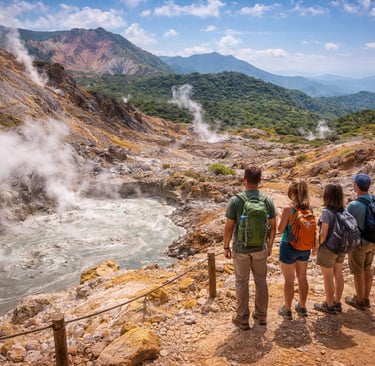
This park is a favorite for travelers who want volcano vibes—steam vents, mud pots, wild landscapes—without paying for luxury day trips.
Why go:
You get a totally different side of Costa Rica: geothermal activity, rugged trails, and fewer “overbuilt tourist” vibes.
What it costs:
Often listed at around $15 for foreign adults (check current official pricing when booking).
Critical planning detail:
This park is commonly closed on Mondays—don’t plan your whole route around it and then arrive on the wrong day.
How to do it cheap:
Self-guided hikes = best value.
Bring food + water; facilities can be limited depending on the sector.
Stay in a simple base nearby and do an early start.
Where to stay:
Look around Liberia or nearby towns, depending on which sector you’re visiting. Use Booking.com and Hotellook to compare budget stays—especially if you’re traveling during high season.
The cheapest way to get around (without hating your life)
The fastest way to blow your budget in Costa Rica is overpaying for transport. The fastest way to blow your sanity is forcing buses for every single move.
Here’s the balance.
Public buses: cheapest, most realistic for budget travelers
If your goal is Costa Rica cheap travel, buses are the foundation. They’re generally reliable, but they can be slow and sometimes require transfers.
Budget moves:
Travel early in the day
Keep snacks and water
Build in buffer time (missed connections happen)
Shared shuttles: the “pay a bit, save a lot of time” option
Shuttles cost more than buses, but they’re sometimes worth it when:
bus routes are messy
You’re losing a full day to transfers
You’re arriving late or leaving early
Car rental: only worth it in specific cases
Renting a car becomes cost-effective when:
You’re splitting it with 2–4 people
You’re hitting remote parks quickly
You want maximum flexibility
If you’re going the car route, compare prices on Economy Bookings (especially in peak season when availability gets weird).
Airport and late-night transfers
If you land late, budget travel can get sketchy fast—limited buses, tired decision-making, and opportunistic overcharging.
For those situations, it’s worth booking a reliable ride ahead using Welcome Pickups or Kiwitaxi so you’re not negotiating in a parking lot at midnight.
Nature tours in Costa Rica: when to pay, when to skip
Let’s be real: “tours” can either be a smart investment… or a budget trap.
Pay for a tour when:
You want wildlife spotting help (sloths, birds, nocturnal animals)
You want context (a guide who explains the ecosystem)
Logistics are painful, and time is limited (especially for places like Río Celeste)
Skip tours when:
You’re doing straightforward trails and beaches
Your budget is tight, and you can go early
You’re comfortable reading signs, using maps, and moving at your own pace
Budget hack: split a guide
If you stay in hostels, you can often find other travelers who want to split the cost of a guide. This is one of the best ways to do nature tours in Costa Rica without paying full private rates.
Smart planning: tickets, timing, and what to pack (the stuff that saves trips)
This section is short but important—because these are the “I wish I knew” details.
Tickets: don’t assume you can pay at the gate
Some parks require online tickets/reservations. If you’re building a trip around Río Celeste or Poás, check ticket rules early so you don’t waste a travel day.
Timing: nature rewards early risers
Wildlife is more active in the morning
Trails are cooler and less crowded
Volcano views tend to be clearer earlier
Packing list for budget nature days
Refillable water bottle
Snacks (fruit, nuts, sandwiches)
Lightweight rain jacket or poncho
Bug spray
Sunscreen
Small cash (not everywhere loves cards)
Shoes you can get muddy in
If you’re using your phone for navigation and bookings, consider an eSIM so you’re not dependent on spotty Wi-Fi. Airalo and Yesim are common traveler picks and can be a lifesaver when you’re trying to show a ticket QR code at a gate.
Travel Costa Rica safety: the budget traveler reality check
Costa Rica is generally traveler-friendly, but don’t confuse “friendly” with “nothing ever happens.”
Most problems are petty theft and careless moments, especially in beach areas and busy tourist zones.
Here’s how budget travelers stay safe without turning the trip into a stress fest:
The rules that actually matter
Don’t leave bags unattended on beaches or at trailheads.
Keep valuables minimal. If you don’t need it, don’t carry it.
Use a crossbody bag or small daypack you can keep close.
ATMs: use indoor/bank ATMs when you can. Avoid sketchy standalone machines at night.
Avoid flashing cash, expensive jewelry, or new gadgets.
Night travel: be smart
Try not to arrive in a new town super late.
If your bus gets in after dark, spend a few dollars on a safe transfer instead of walking unknown streets with luggage.
That’s where pre-booked rides can genuinely improve your travel Costa Rica safety—especially for airport arrivals or late transfers. Welcome Pickups and Kiwitaxi are useful when safety and reliability matter more than saving the last few bucks.
Insurance: boring until you need it
If you’re doing hikes, volcano trails, waterfall paths, or anything active, insurance is one of the smartest “budget” purchases you can make—because an accident is the fastest way to destroy a budget.
World Nomads is popular with travelers who do active days and want coverage that fits that style of trip.
Sample itineraries: 3 days and 7 days (budget-focused)
You can mix and match, but these give you a structure that keeps costs under control.
3-Day “San José + easy nature” itinerary (budget-friendly starter)
Day 1: Poás Volcano day trip
Go early, enjoy the crater views, and be back in San José for dinner.
Day 2: Braulio Carrillo rainforest day
Cheap nature reset near the capital.
Day 3: Transfer day + optional Carara stop
If you’re heading Pacific, consider Carara as a high-value add-on.
Why this works for Costa Rica cheap travel:
You’re minimizing long transfers and stacking nature days around one base.
7-Day “best value nature loop” itinerary (more variety, still budget-minded)
Option A: San José → Uvita → Río Celeste / Tenorio → Liberia area (Rincón de la Vieja)
Day 1: Arrive in San José, settle in, prep tickets/plans
Day 2: Poás Volcano
Day 3: Travel to Uvita, beach evening
Day 4: Marino Ballena (whale tail low tide)
Day 5: Travel toward the Tenorio area / La Fortuna base
Day 6: Río Celeste (Tenorio) early start
Day 7: Move toward Liberia + Rincón de la Vieja (or travel onward)
Why this works:
You get volcano, beach, rainforest, waterfall, and geothermal landscapes—without bouncing back and forth across the country.
For stays, you’ll usually save money by booking simple places with kitchens and solid reviews. Compare prices on Hotellook, then cross-check Booking.com for cancellation terms and location filters.
Where to stay cheap near each nature spot (quick, practical guide)
This isn’t about naming 40 random hostels—it’s about choosing areas that keep you close to nature without paying resort prices.
Budget hub picks
San José: good for Poás and Braulio Carrillo day trips
Cahuita / Puerto Viejo area: Caribbean nature without premium pricing
Uvita: perfect for Marino Ballena and nearby waterfalls
La Fortuna / Tenorio region: good base for Río Celeste planning
Liberia area: gateway for Rincón de la Vieja
What to filter for when booking:
kitchen access (saves you money immediately)
walkability to food
strong location reviews (not just “nice staff”)
fan/AC depending on region (Caribbean can feel humid)
Use Booking.com when you want flexible cancellation and loads of filters. Use Hotellook when you want a fast price comparison across platforms.
Final “do this, not that” checklist (the budget nature version)
Do this:
Choose a couple of hubs and day trip from them
Go early for wildlife and better views
Pack your own snacks and water
Book required park tickets ahead of time
Use buses for most long moves, shuttles only when they save a full day
Not that:
Don’t book tours by default
Don’t plan a route that crisscrosses the country
Don’t arrive late at night in unfamiliar towns if you can avoid it
Don’t assume you can pay at every park gate
One last tip before you book anything
If you’re planning your first Costa Rica trip and you want the best nature-to-cost ratio, don’t overcomplicate it.
Pick a few of these parks, build your route around easy hubs, and give yourself mornings for wildlife. That’s how Costa Rica goes from “expensive destination” to “how is this much beauty still affordable?”
If you want, tell me your trip length (5, 7, 10 days), your arrival airport, and whether you’re bus-only or okay with one car rental day—and I’ll turn this into a tight, budget-optimized route you can actually follow.






About Budget Trips Guide
BudgetTripsGuide.com is your trusted resource for smart, affordable travel. We specialize in practical budget travel tips, low-cost destination guides, and insider hacks to help you explore the world without overspending. Whether you're a solo traveler, digital nomad, or first-time backpacker, our goal is to make cheap travel easy, safe, and unforgettable. Discover the best value travel insurance, cheap flights, and affordable accommodation options—all in one place.
GET FREE TIPS SEND DIRECTLY TO YOU
© 2025. All rights reserved.
Contact Us: team@budgettripsguide.com