
Greece on a Budget: Quick Answer
For most travelers planning cheap trips to Greece, Athens is the easiest low cost choice, Naxos is the best affordable Greek island holiday for a relaxed week, and Crete offers the strongest value for longer stays if you choose one area rather than trying to see the whole island. Athens keeps transport simple and gives you history, food, and beaches without ferry costs. Naxos works well when you want one compact Cycladic base. Crete can be excellent value, but its size means transport decisions can quickly affect your budget.
The cheapest overall plan is usually Athens only, especially outside peak summer. For a city and island combination, pair Athens with Naxos. Choose Crete when you have at least five or six nights and want beaches, villages, hiking, and local food without changing hotels repeatedly. Prices move sharply with season, departure city, booking timing, and room type, so treat every example below as illustrative rather than a live quote.
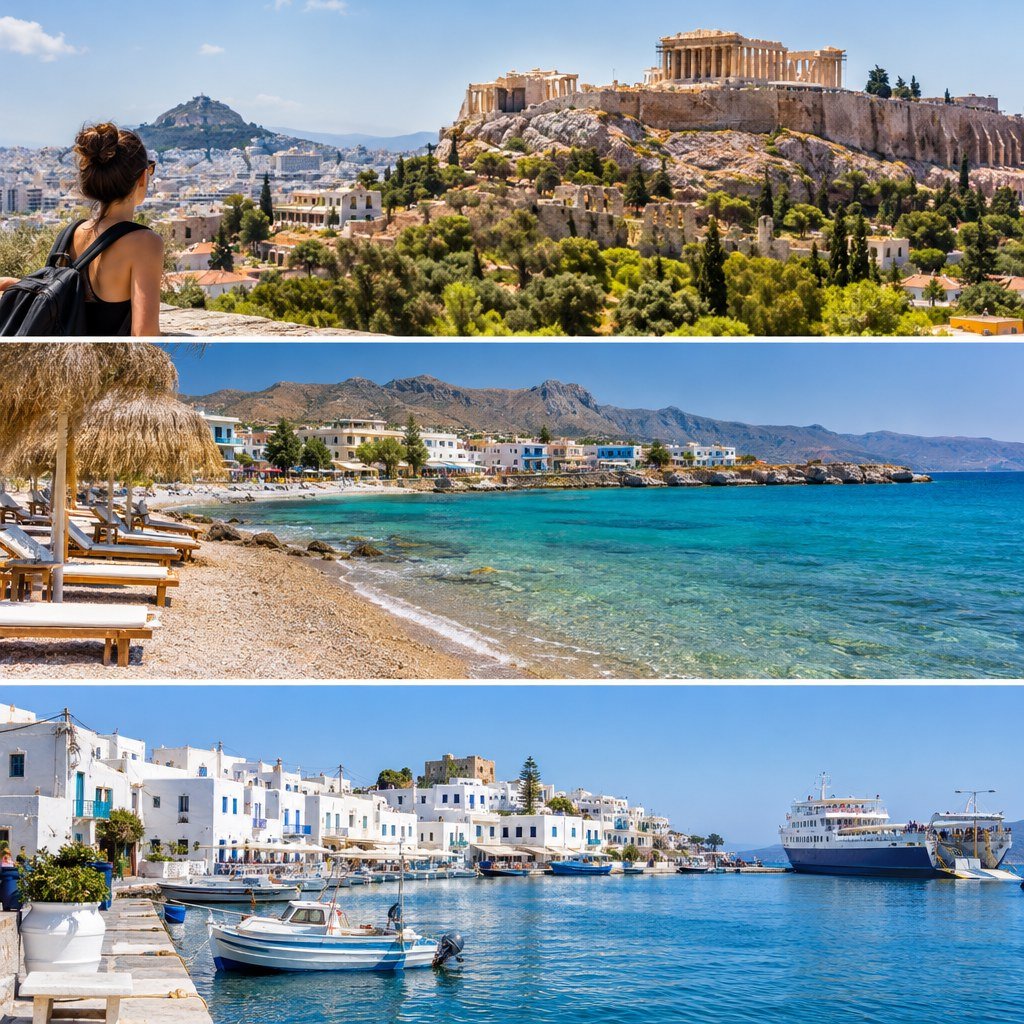
Athens vs Crete vs Naxos: Which Offers Better Value?
Athens is not an island escape, but it can be the most efficient answer to Greece on a budget. International arrivals, the metro, walkable historic neighborhoods, markets, museums, and an enormous spread of food options help control spending. You can stay near public transport rather than directly beside the Acropolis, use the airport metro or bus, and add a beach day by tram, bus, or suburban rail depending on your chosen coast.
Athens: Lowest friction for a short stay
Stay in a neighborhood connected to a metro line rather than paying a premium for the most photographed address. A mix of bakery breakfasts, market snacks, neighborhood tavern lunches, and one sit down dinner can make Athens feel generous without becoming expensive. Major sights are close enough to group into walking days, which also reduces unnecessary tickets and taxis. It is especially good for travelers who prefer museums and street life to daily beach transfers.
Crete: Best value when you slow down
Crete is large enough to reward a location strategy. Chania, Rethymno, Heraklion, and the south coast are not interchangeable bases. Pick one region, then price accommodation, airport access, beaches, and day trips together. A rental car may unlock remote beaches and mountain villages, but parking, fuel, insurance, and one way drop fees can erase a cheap room saving. Buses can work well between larger towns, while taxis become costly for isolated stays.

Naxos: A balanced choice among cheap Greek islands
Naxos often appeals to travelers who want Cycladic scenery without building an itinerary around constant transfers. Naxos Town has ferries, supermarkets, tavernas, bus connections, and evening life within a manageable area. Beach villages can be convenient, but compare the transfer cost and frequency before booking. The island has mountain villages and long beaches, yet it remains easier to understand than Crete. Its limitation is simple: ferry availability and August accommodation can be less forgiving than mainland choices.
Illustrative Budget Examples, Not Real Time Prices
These examples deliberately use round assumptions, not current quotations. They exclude international flights, shopping, nightlife, travel insurance, and entrance fees. They assume a solo traveler in a simple private room or bed, a modest meal budget, and self selected transport. Couples sharing a room may lower the accommodation share; solo travelers choosing private taxis or peak dates may spend far more. Use them as a planning framework, then replace each line with your own dates.
- Athens, four nights: accommodation budget of €55 per night = €220; food at €28 per day for five days = €140; local transport and airport connection = €35; sights and incidentals = €55. Illustrative total: €450.
- Naxos, five nights from Athens: accommodation budget of €65 per night = €325; food at €30 per day for six days = €180; return ferry allowance = €100; local buses and transfers = €45; incidentals = €50. Illustrative total: €700.
- Crete, six nights: accommodation budget of €60 per night = €360; food at €30 per day for seven days = €210; return flight or ferry allowance = €120; buses and local transfers = €70; incidentals = €60. Illustrative total: €820.
These totals are not promises. A budget bed can cost less, while school holidays, seafront rooms, luggage fees, rental cars, and fast ferries can add considerably more. For a better personal plan, start with this site’s travel budget planning guide, then assign a small contingency instead of spending every available euro before departure.
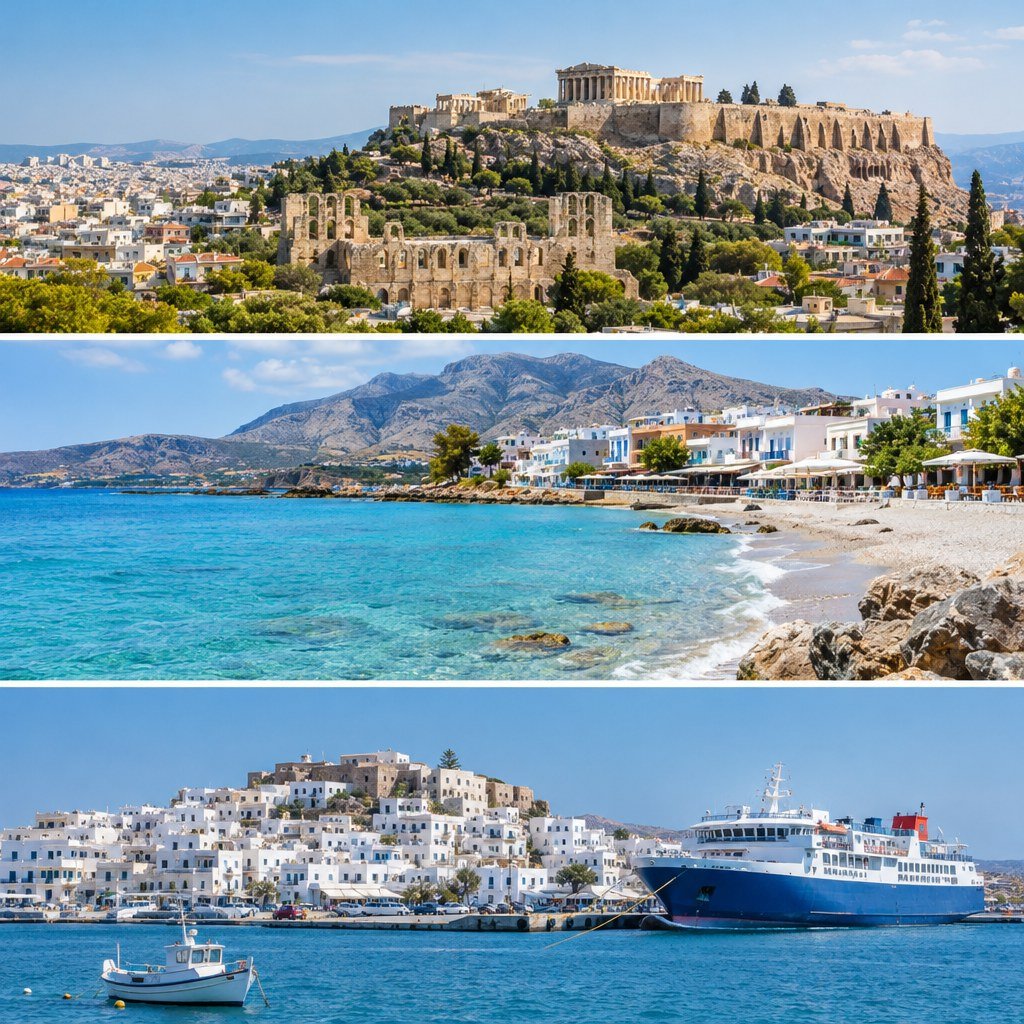
Ferry vs Flight: The Cost Is More Than the Ticket
For Athens to Naxos, a ferry is often the most straightforward connection because it links central Piraeus with the island port. Compare conventional and high speed services carefully: the faster option may cost more, and the travel day still includes getting to Piraeus, boarding early, and reaching your accommodation after arrival. Wind can affect sea travel, particularly on exposed Cycladic routes, so avoid booking a nonrefundable onward connection with no buffer.
Crete is different. Flights from Athens to airports such as Heraklion or Chania can save substantial time, while ferries may suit travelers who prefer overnight travel or have a specific port plan. A flight fare is only comparable after adding baggage, airport transport, and the cost of reaching your final Cretan base. Ferry schedules and weather conditions can also change. Check official operator information and current sailing details before committing; Visit Greece is a useful starting point for destination planning at Visit Greece.
Do not build an island hopping plan around the cheapest headline ticket alone. Every extra island can mean another port transfer, a lost half day, luggage handling, and a higher risk of weather disruption. Two islands are worthwhile only when each stop has enough nights to justify the move.
When Greece Is Cheapest to Visit
July and August generally bring the strongest demand, especially for central Athens, popular beaches, and Cycladic accommodation. The highest practical savings usually come from changing dates before reducing comfort: travel in late spring or early autumn, stay a few streets back from waterfront areas, and reserve cancellable rooms early. October can be attractive for warm days and lower pressure, but ferry frequency, beach services, seasonal restaurants, and some tours may be reduced. Always check the exact route and opening dates.
Book refundable accommodation when your ferry or flight plan is not final. Compare options through Booking.com or Trip.com, then read cancellation terms rather than assuming every low price is flexible. For a paid activity or transfer, compare inclusions and meeting points before booking through Klook.
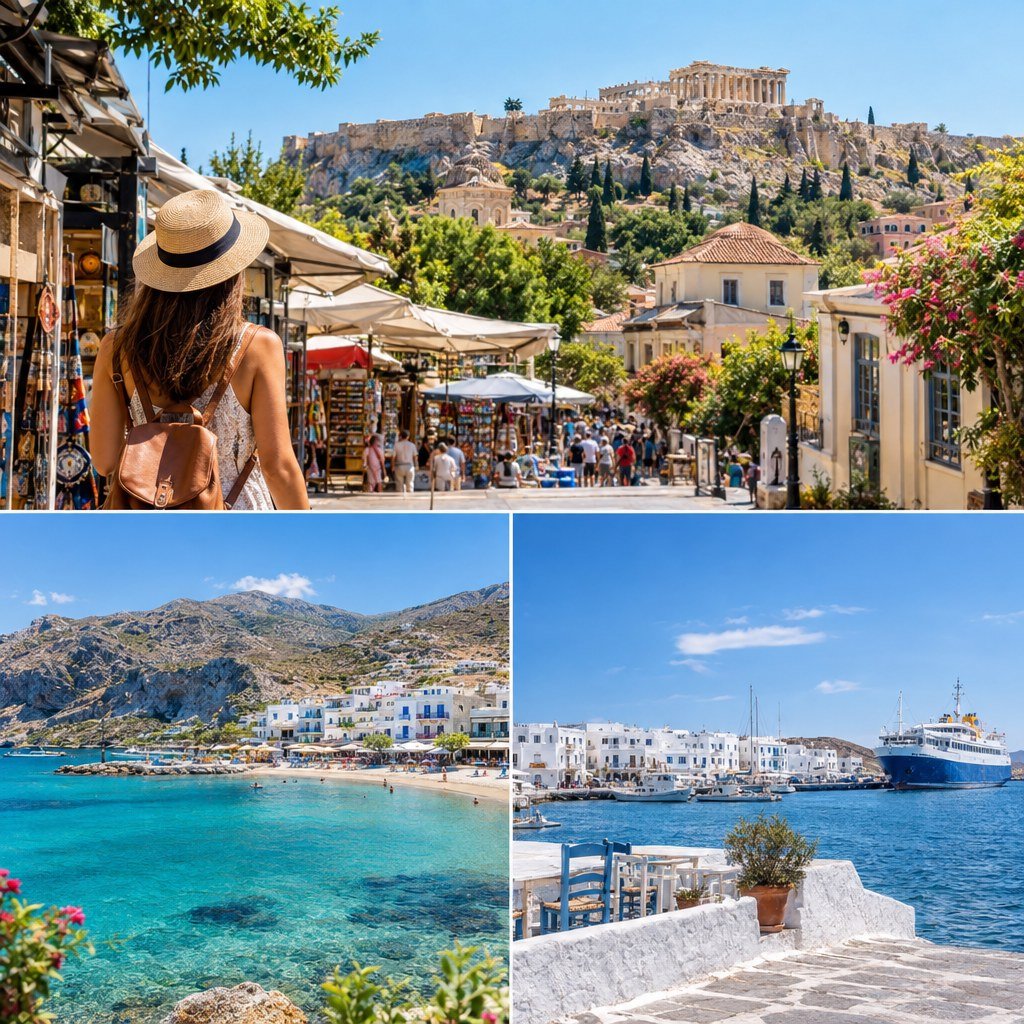
Athens Plus an Island or Two Islands?
For a first trip of seven to nine nights, Athens plus one island is usually the wiser budget itinerary. Spend two or three nights in Athens, then continue to Naxos for four to six nights. You get city history, a varied food scene, beaches, and island atmosphere while paying for only one major sea crossing. It also creates a useful buffer if weather affects a ferry before an international departure.
Choose Athens plus Crete if your trip is longer and you are comfortable flying or taking a longer ferry. Stay in Athens briefly, then give Crete at least five nights in one area. A Naxos and Crete pairing is possible, but it is better for travelers with ten or more nights, flexible schedules, and a genuine reason to experience both. Otherwise, the extra transfer consumes value rather than adding it.
Choose Athens if…
You have three to five nights, value museums and food, or want dependable public transport without ferry logistics.
Choose Crete if…
You have six or more nights, want variety, and can commit to one region instead of chasing the whole island.
Choose Naxos if…
You want a slower island week, straightforward ferry access, beaches, and fewer local transport complications than Crete.
Budget Greece FAQ
Is Athens cheaper than the Greek islands?
Often, yes. Athens has more accommodation inventory, inexpensive food choices, and a strong public transport network. An island can still be good value, but ferry or flight costs and limited peak season rooms raise the total.
Is Naxos one of the cheap Greek islands?
Naxos can be more manageable than famous smaller islands because it has a larger town, supermarkets, bus routes, and varied accommodation. It is not automatically cheap in August, so compare total transport and room costs.
Do I need a car in Crete?
No, but it depends on your base. Buses suit larger towns and selected routes. A car is more useful for remote beaches, mountain villages, and flexible exploration. Price the full rental cost before deciding.
What is the simplest money saving rule?
Reduce moves, not experiences. Stay longer in one well connected base, book refundable accommodation early, use public transport where realistic, and leave a weather buffer before any flight home.
Build the Greece Trip That Fits Your Time
Athens is simplest, Crete rewards longer stays, and Naxos offers an appealing one island balance. Compare dates, transfers, and cancellation rules before booking.