
For most first-time budget travelers, the best place to stay in Bangkok is near a BTS or MRT station in Sukhumvit or Silom. These neighborhoods make sightseeing, airport connections, food stops, and late returns simpler without requiring expensive hotels. Bangkok Old City is better for temple-focused trips, while Siam works for shoppers who find a deal. The key is not simply choosing the cheapest room: choose a clean hotel within a genuinely walkable distance of rail transit, then compare the final price after taxes and fees.
Choose the Right Bangkok Neighborhood Before Booking
Bangkok is huge, humid, and often slower to cross than a map suggests. A low nightly rate can become poor value if you spend every day paying for long rides or sitting in traffic. Start with your priority: easy rail access, nightlife, temples, shopping, or a quieter local feel. Then search accommodation within a short, practical walk of a station rather than relying on phrases such as “near BTS.”
For value, look beyond famous station names. A hotel near Phra Khanong, On Nut, or Ari may cost less than one in the busiest central blocks while keeping you on the BTS line. In Silom, a short walk to either BTS Sala Daeng or MRT Si Lom gives useful flexibility. Read recent guest comments for real walking conditions, especially crossings, narrow sidewalks, construction, and late-night noise.

Best Areas to Stay in Bangkok on a Budget
Sukhumvit: Best All-Around Choice for First Timers
Sukhumvit is not one uniform neighborhood; the station you choose changes the experience. Nana and Asok are central and convenient but can be crowded, noisy, and pricier. Phrom Phong is polished and often expensive. For cheaper hotels in Bangkok, search farther along the line around Phra Khanong or On Nut, where you can still reach central attractions without changing hotels.
This area is ideal if you want supermarkets, casual restaurants, street food, malls, and dependable BTS access nearby. Prioritize a room on a quieter side street, but check the walking route after dark. A hotel advertised as only a few blocks away may involve unpleasant traffic crossings or a long detour under elevated roads.
Silom: Best Balance of Rail Links and City Energy
Silom is a strong alternative in the Sukhumvit versus Silom decision. It combines BTS and MRT access, making it easier to reach Chinatown, Chatuchak, Sukhumvit, and riverside piers. The district has office towers, markets, parks, restaurants, and evening activity, with different moods from block to block.
Stay near Sala Daeng, Chong Nonsi, or an MRT station if transport matters most. Patpong-adjacent streets can be lively and adult-oriented, so travelers seeking quiet should read location reviews carefully. Budget options may be better on side streets, but do not sacrifice a safe, straightforward walk back to the station.
Siam: Best for Shopping Without Daily Transit Planning
Siam is extremely convenient for shopping centers and BTS connections, but it is not always the cheapest Bangkok hotel neighborhood. It can work when a sale or weekday rate brings a small hotel into range. If you stay here, you can easily connect to other BTS branches and spend less time navigating unfamiliar streets.
Choose Siam for a short visit focused on malls, air-conditioned breaks, and central positioning. Skip it if your priority is a low-cost, neighborhood-style stay; On Nut, Ari, or parts of Silom usually provide better room value.
Old City and Rattanakosin: Best for Temples and Atmosphere
Bangkok Old City accommodation puts Wat Pho, the Grand Palace area, museums, and riverside sights close by. It is particularly appealing for travelers who want dawn temple visits and evenings around Khao San Road or Phra Athit. However, BTS trains do not directly serve much of this historic core.
Expect to use buses, boats, ride-hailing, or taxis more often. This can still be sensible for a temple-heavy itinerary, but it is less convenient for repeated trips to Sukhumvit or shopping districts. Pick a property with good recent comments about cleanliness, air conditioning, and soundproofing rather than choosing solely by proximity to nightlife.
Transit Matters More Than a Fancy Lobby
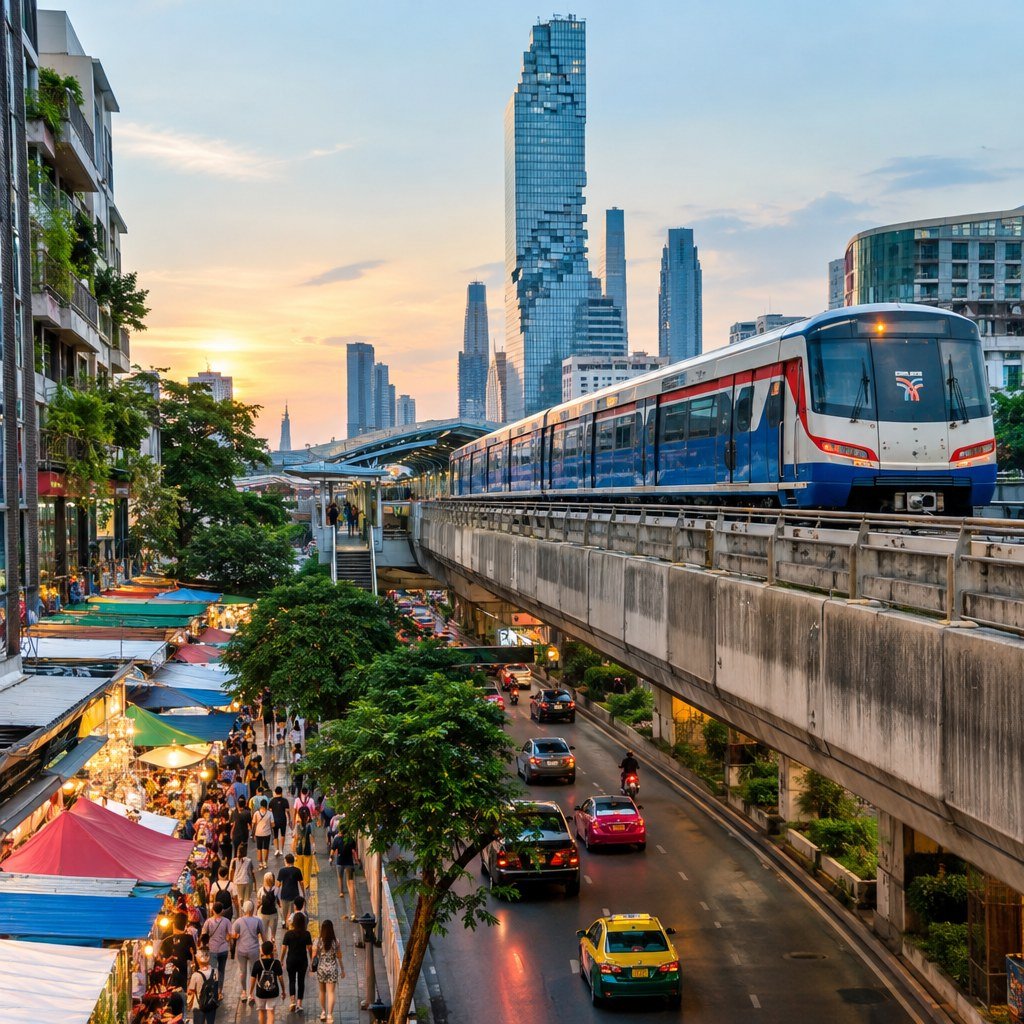
The BTS Skytrain and MRT are usually the simplest way to cross central Bangkok during busy periods. Check current routes, fares, operating information, and station maps on the official BTS website and Bangkok Metro website before travel. A room within a manageable walk of either system can save both money and energy.
For Suvarnabhumi Airport arrivals, the Airport Rail Link connects toward central rail interchanges, making BTS or MRT neighborhoods practical. Late arrivals, heavy luggage, children, or a hotel far from the final station can make a taxi worth the added cost. Use the official taxi queue, confirm the meter is used, and keep small bills available for tolls where applicable.
Riverside hotels can feel peaceful and scenic, but budget travelers should price the time and transport too. Some are near boat piers, yet getting to rail may require an extra connection. Riverside is best when the hotel itself is a bargain, your plans include boats and nearby attractions, or you are happy using taxis at night.
Match Your Hotel Area to Your Trip Length
Three Days: Stay Central and Keep Transfers Simple
On a three-day first trip, stay in Sukhumvit near a BTS station or in Silom near both rail systems. Use one day for temples and the river, one for shopping or modern Bangkok, and one for food, markets, or a neighborhood you enjoyed. A central base reduces the temptation to waste precious hours moving between distant areas.
Six Days: Split Your Time Only If It Helps
With six days, one well-located hotel is still easiest, but a two-area stay can work. Spend several nights in Silom or Sukhumvit for rail-connected exploring, then move to Old City or the riverside for a slower final stretch. Do not split stays merely for novelty; packing, checkout, and transit can consume a meaningful part of a day.
For ideas once you have a base, browse cheap and amazing things to do in Thailand and this Thailand food lover’s guide. Both can help you plan days around districts instead of zigzagging across the city.
How to Book Cheap Hotels in Bangkok Without Regret
Use several search dates because Bangkok hotel rates can change with weekends, holidays, conventions, and room availability. Treat displayed price bands as illustrations rather than promises: basic private rooms, compact boutique hotels, and larger international properties can overlap depending on the date. The final total and location usually matter more than a single headline rate.
- Check whether taxes, service charges, deposits, and breakfast are included before comparing totals.
- Choose free cancellation when your arrival plans are uncertain or your flight lands late.
- Read the newest reviews for Wi-Fi, air conditioning, water pressure, elevator access, and noise.
- Confirm the payment method, especially if your card charges foreign transaction fees.
- Check the walking route to BTS, MRT, or a reliable transport option in daytime and darkness.
- Ask whether luggage storage is available if you arrive before check-in or depart late.
Compare refundable options through Trip.com and Booking.com, then read every condition before paying. For broader planning advice, see our guide to finding cheap accommodation. Never assume a nonrefundable bargain is worthwhile if a delayed flight could leave you paying twice.
Bangkok Budget Hotel FAQ
Is Sukhumvit or Silom better for a first Bangkok visit?
Sukhumvit suits travelers who want plentiful food, malls, and a straightforward BTS base. Silom suits travelers who value both BTS and MRT connections, parks, and easier access toward Chinatown. Either is better than a distant bargain hotel if you plan to explore widely.
Is Old City a good place to stay?
Yes, especially for temples, river sights, and a historic atmosphere. It is less convenient for rail-dependent sightseeing, so budget for occasional taxis, boats, or ride-hailing. Choose it for the experience, not because it appears closest to every attraction.
How close should my hotel be to a station?
A short, clearly walkable route is preferable. Check actual guest photos and mapping directions, because elevated roads, large intersections, and Bangkok’s weather can turn a seemingly easy walk into an exhausting one.
Book the Location, Then Book the Room
For a practical Bangkok budget stay, start with Sukhumvit or Silom near rail transit, compare final totals, and reserve a flexible room with recent reviews.